When a medical emergency happens, the last thing you want to worry about is who pays for the ambulance. The short answer: SHA now covers emergency ambulance evacuation and many private insurance plans cover it too. Here is how each works and what to do when an emergency happens.
What SHA covers
Through the SHA 922 Lifeline, emergency calls are free across all networks. The programme covers evacuation and the first 24 hours of treatment, whether or not the patient is registered with SHA. Hospitals contracted by SHA have been directed not to deny or delay emergency care because a patient cannot pay or their cover can’t be confirmed.
- Call 922. A trained dispatcher assesses the emergency, stays on the line and identifies the nearest available ambulance.
- Dispatch is coordinated nationally. Patients go to the nearest facility able to handle their condition, which may not be the hospital you prefer.
- It covers emergencies only. Booked transfers, hospital discharge transport and event standby cover are separate.
- Rollout is ongoing. SHA has allegedly contracted 1,243 ambulance and emergency service providers so far, so availability can vary by county.
What private insurance covers
It depends on your insurer and plan. Private cover sits on top of SHA, adding private hospitals, higher limits and extra benefits. Examples include local emergency road evacuation on Jubilee’s CoverBora, air and road evacuation on Jubilee’s J-Care, and road or air evacuation across East Africa on AAR Protect. International plans typically include worldwide evacuation and repatriation.
Check your policy for:
- Pre-authorisation. Many plans require it for inpatient treatment. In an emergency, notify your insurer as soon as you can.
- Licensed ambulances only. Transport in an ordinary vehicle may not be reimbursed.
- Separate limits. Road, air and overseas evacuation are often separate benefits.
- Waiting periods. Some benefits only start after a waiting period.
SHA or private insurance: which one pays?
In an emergency, you don’t have to choose. Call 922 first and let the dispatcher coordinate the response. Your private plan may add benefits that SHA’s emergency programme does not, such as air evacuation.
If you would rather call a private ambulance directly, you can. However, SHA dispatches are coordinated through the national centre, so confirm with the provider and your insurer beforehand whether the trip would be reimbursed. For booked transfers, discharge transport and event standby cover, check your policy or ask the provider.
What to do in an emergency
- Call 922 and follow the dispatcher’s instructions.
- Stay on the line. The dispatcher will guide you until the ambulance arrives.
- Don’t delay care over paperwork or insurance questions. If you are asked to pay before emergency treatment, raise it with the facility management and SHA.
- Keep the ambulance run sheet, receipts and hospital records.
- Notify your insurer as soon as you can.
Need a transfer or standby medical cover?
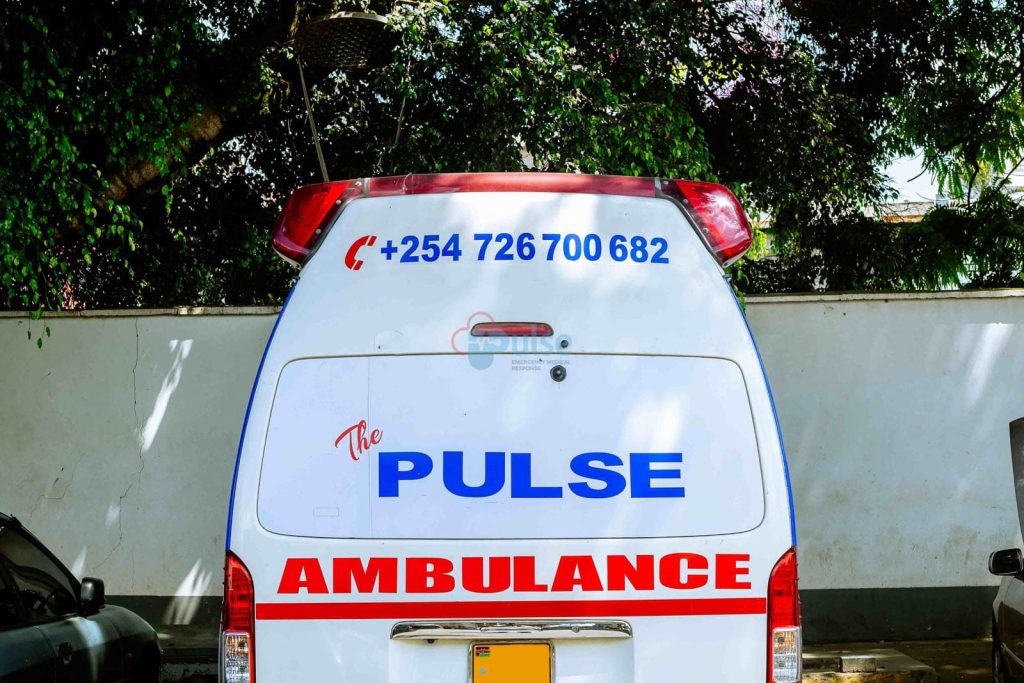
Pulse Medical Response provides emergency response, inter-facility transfers and standby EMT cover with AHA-certified BLS and ACLS teams across Nairobi and Kenya. Call +254 726 700 682 or message us on WhatsApp.